
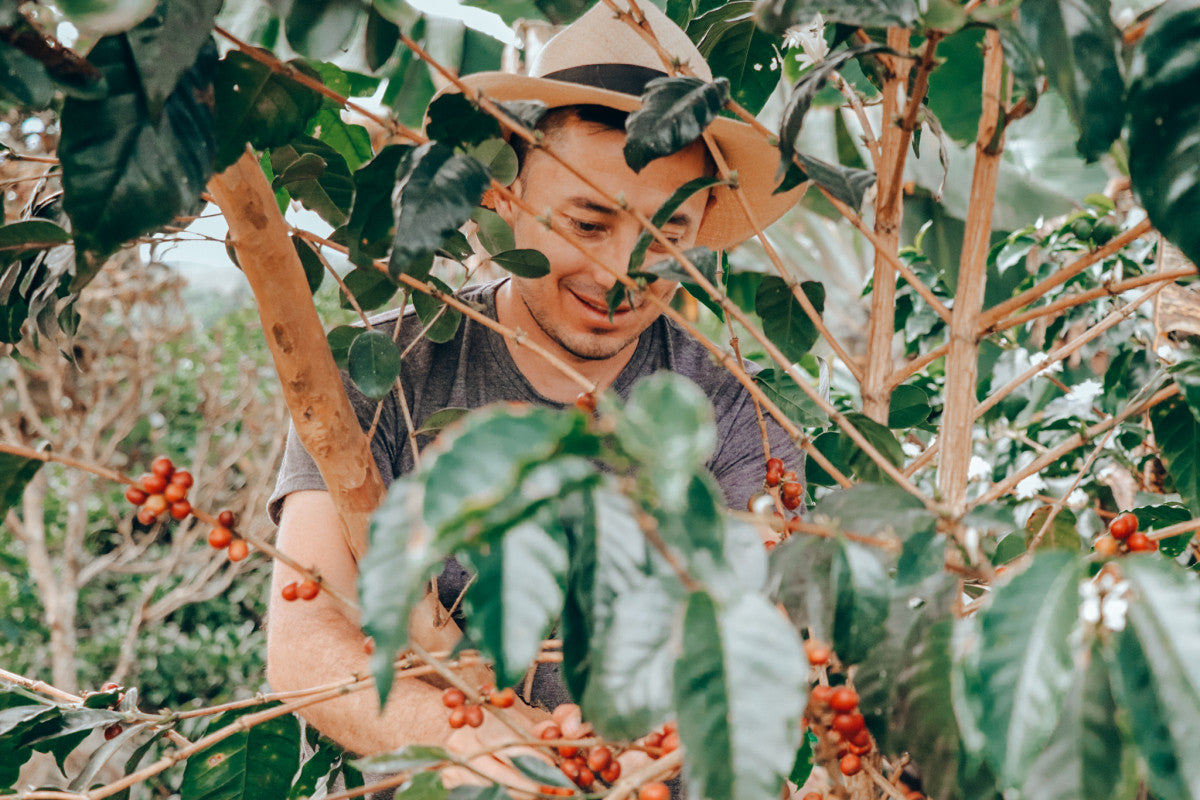
Nestled in the lush landscapes of Colombia, FINCA EL PARAÍSO has become a renowned name in the specialty coffee world, celebrated for its pioneering processing techniques and exceptional beans. This family-run farm, led by Samuel Bermudez and his son Diego, has established itself as a hub of innovation, driven by a deep passion for pushing the boundaries of coffee processing. Their latest venture, the Geisha Anti-Maceration processing, is a testament to their commitment to redefining coffee's potential.
The Legacy of Finca El Paraíso: Samuel and Diego Bermudez
Finca El Paraíso’s story is one of tradition and innovation. Samuel Bermudez, the patriarch of the family, cultivated a love for coffee and passed it on to his son, Diego, who now leads the farm’s revolutionary processing methods. Together, they have transformed this small farm into a powerhouse of coffee innovation, winning awards and recognition from coffee aficionados around the globe.

Diego Bermudez doing coffee cupping (Source: Instagram)
What Made Finca El Paraíso Famous
Finca El Paraíso first gained international fame for its experimental processing techniques, especially with varieties like Castillo, Bourbon, and Geisha. The Bermudezes' mastery in crafting unique flavor profiles has captured the attention of top roasters worldwide. Esteemed coffee brands such as Manhattan Coffee Roasters in Netherlands and Paradise Roasters in Hawaii have frequently featured Finca El Paraíso beans due to their extraordinary quality and distinctive flavor note. The farm’s coffees are known for their vibrant acidity, rich sweetness, and complex aromatics, qualities that make them stand out in the competitive world of specialty coffee.

(Source: Instagram)
Finca El Paraíso in the World Championships
Finca El Paraíso has also made its mark in the competitive coffee scene. Diego Bermudez’s innovative approaches have been showcased by several competitors in global championships, who sought to leverage the farm’s cutting-edge processes to gain an edge. The unique flavors and textures created through these methods have proven successful, helping several baristas earn top spots in international competitions.
Unpacking the Anti-Maceration Processing Technique
Anti-maceration is an advanced processing technique that seeks to minimize the contact between the coffee fruit pulp and the beans during fermentation. By placing the beans in a controlled vacuum environment with minimal oxygen, Finca El Paraíso is able to manipulate the fermentation process, encouraging select microbes to enhance desired flavor compounds without overwhelming the beans with fruity overtones. This creates a cleaner and more structured cup profile, preserving the bean’s natural character while introducing nuanced flavor complexity.

(Source: Instargram)
The Geisha with Anti-Maceration Processing: A Unique Offering from El Paraíso
Among the most exciting innovations at Finca El Paraíso is their Geisha Anti-Maceration coffee. The Geisha variety is celebrated for its exquisite flavors and delicate balance, but the anti-maceration processing at Finca El Paraíso takes it a step further, creating an experience unlike any other. The result is a cup that showcases florals like violets and rosehip, with subtle berry jam sweetness, bringing out the Geisha’s inherent qualities while adding a unique twist that can only be achieved through anti-maceration.

Finca El Paraíso's Geisha Anti-Maceration beans are highly sought after by roasters and coffee lovers alike, offering a rare taste of what can be achieved when tradition meets innovation. This approach not only sets Finca El Paraíso apart but also reinforces the Bermudez family’s position as leaders in specialty coffee processing.
To Roaster Fellows in Japan: If you are interested in roasting and testing the beans, please find this link for purchasing the limited 100g green beans packs.